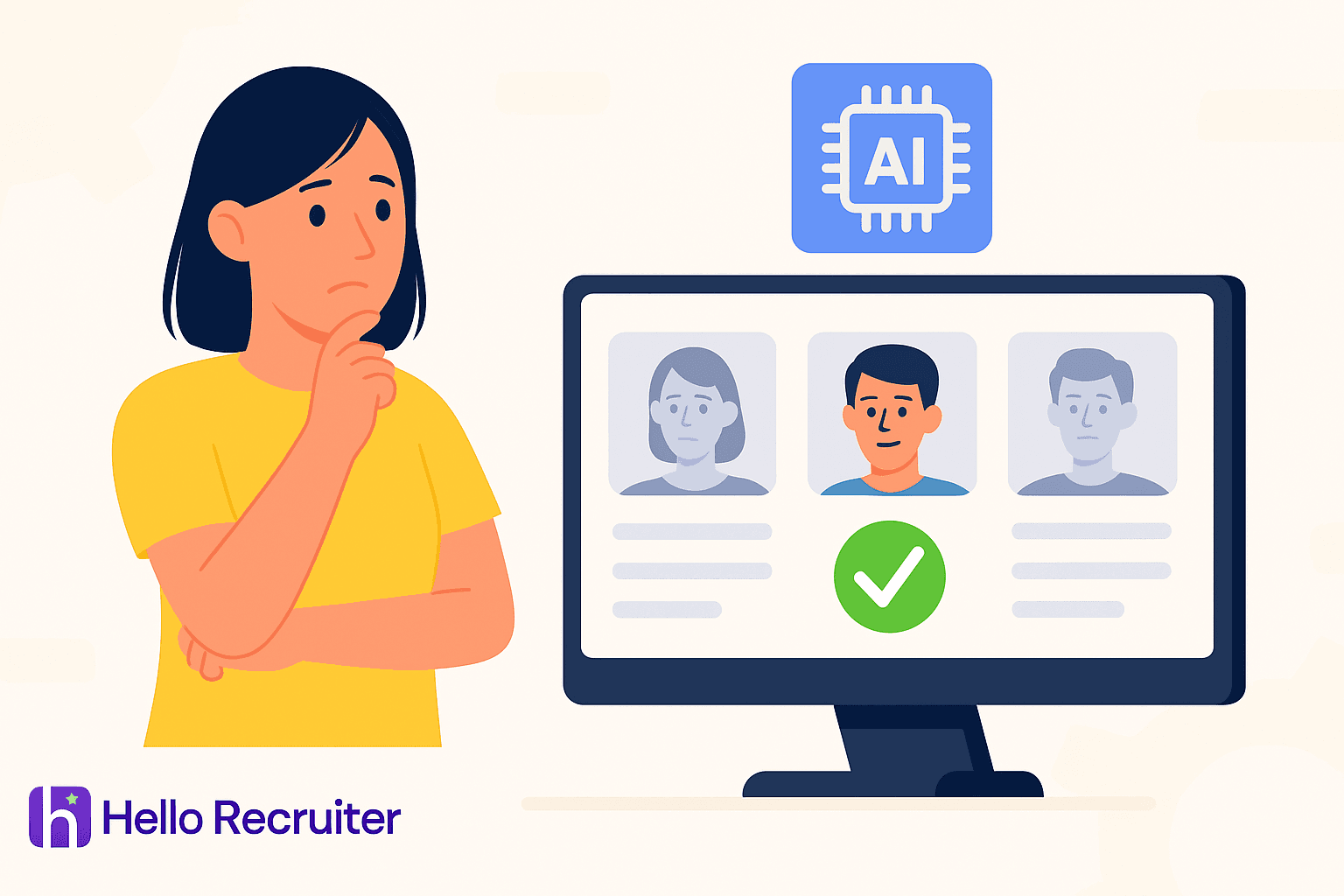
In a high-volume hiring landscape, sophisticated fraud is on the rise. Fabricated resumes and bad actors can easily slip through manual reviews, wasting countless hours and exposing your company to risk. An industry report found that 78% of HR professionals have spotted lies on resumes.
Traditional applicant tracking systems that rely on simple keyword matching are no longer enough. To truly secure your hiring funnel, you need a deeper, more intelligent approach. This is where AI candidate analysis becomes essential, acting as a digital forensics expert to uncover the truth behind every application.
How Does AI Candidate Analysis Go Beyond Keyword Matching?
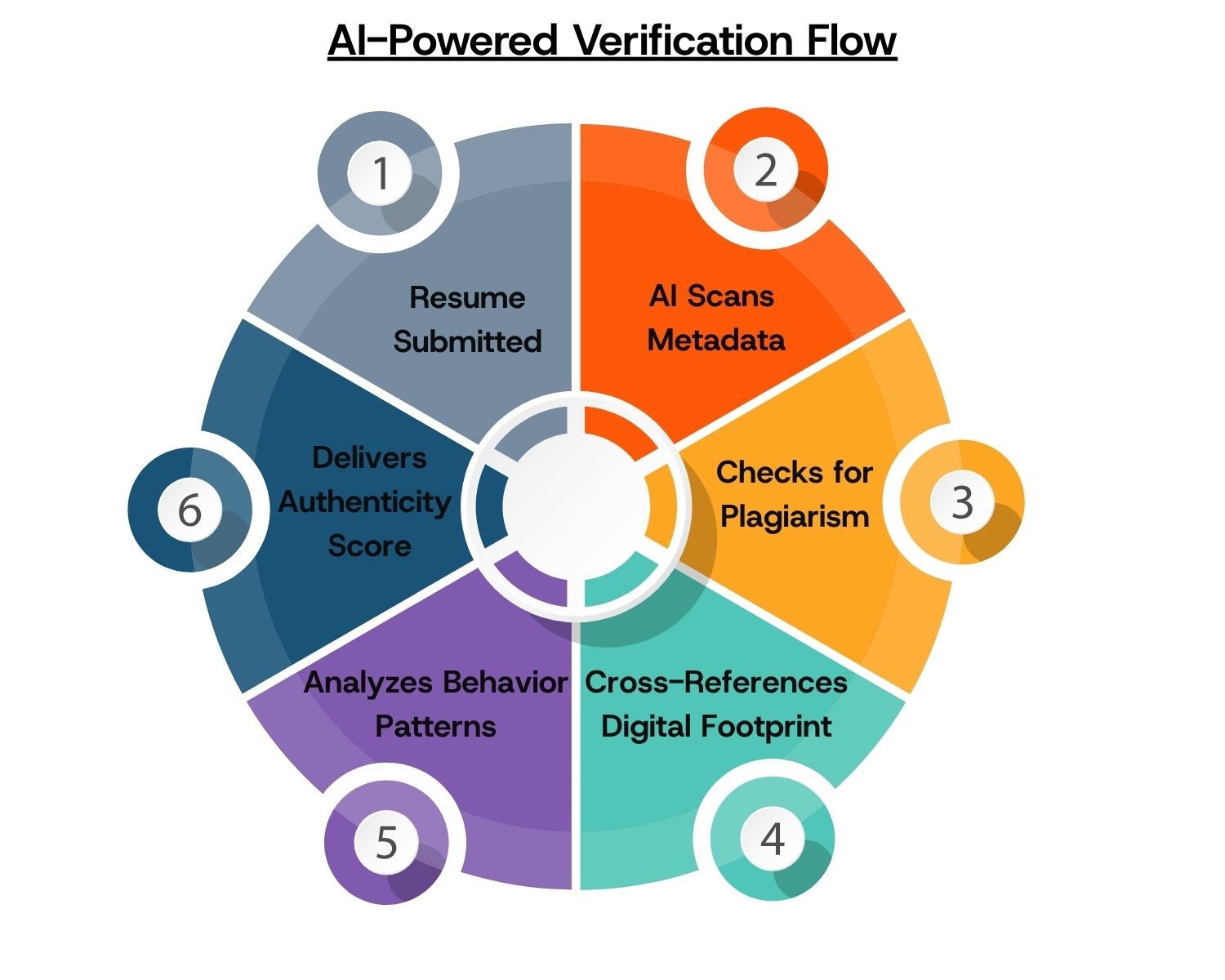
AI candidate analysis uses a multi-layered verification process that functions like a fraud detection system for your talent pipeline. It assesses hundreds of data points to find anomalies and patterns of deception that are invisible to the human eye, ensuring you only engage with authentic applicants.
This process moves far beyond simply checking for skills or keywords. It examines the structural integrity, origin, and consistency of an application, cross-referencing information across multiple sources. This deep-level AI candidate analysis identifies suspicious profiles with a level of precision that manual screening cannot replicate. It provides a foundational layer of security, allowing your recruiters to focus on qualified, genuine talent instead of playing detective.
What Is a Candidate's "Digital DNA" and How Does AI Analyze It?
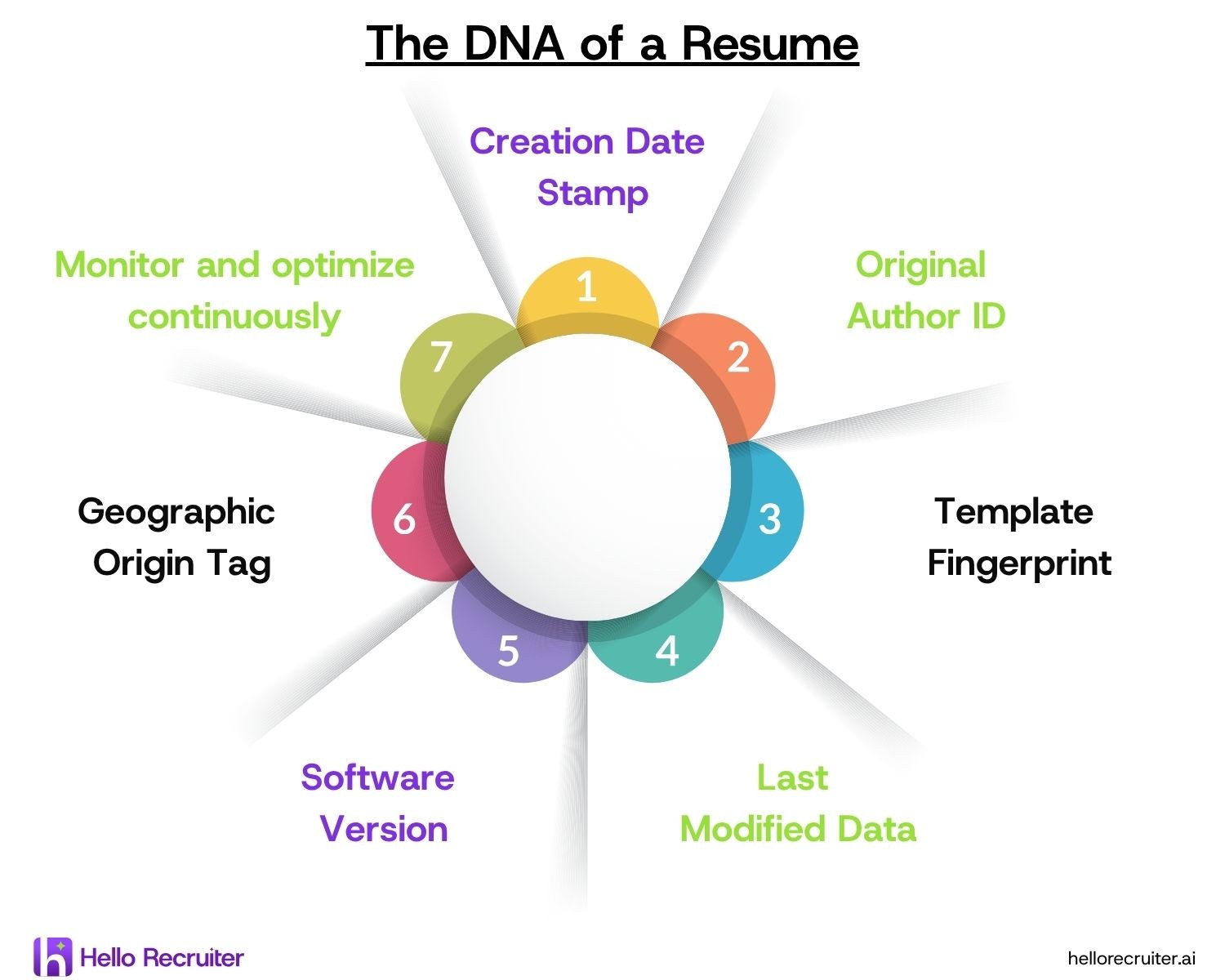
The "digital DNA" of a resume refers to its metadata—hidden information embedded within the file itself. AI candidate analysis inspects this data to verify the document's origin and integrity, revealing inconsistencies that often indicate a coordinated fraudulent effort.
Creation and Author Data
AI tools examine when a file was created and by whom. Multiple applications from supposedly different candidates that share the same author information or were created on the same device at the same time are instantly flagged as a major red flag.
Document Template Fingerprinting
Fraud rings often use a single resume template to mass-produce applications. Our AI candidate analysis recognizes these structural similarities and patterns, identifying clusters of fake resumes that might otherwise appear unique and legitimate to a human reviewer.
Software and Edit History
The system can analyze the software used to create the document and review its edit history. A resume that has been repeatedly altered by multiple unknown users or created with suspicious software can be a clear sign of a fabricated submission.
How Does AI Verify a Candidate's Digital Footprint?
An effective AI candidate analysis platform extends its verification beyond the resume to the public web. It cross-references application data with online sources to build a cohesive and believable professional story, flagging any discrepancies that suggest misrepresentation.
This automated candidate verification process is crucial for confirming a candidate's existence and experience. A genuine professional almost always leaves a verifiable trace online. The absence of a footprint, or one that contradicts the resume, is a strong indicator of a potential bad actor.
LinkedIn Profile Consistency: The AI cross-references the resume’s job titles, companies, and timelines with the candidate's LinkedIn profile. Significant mismatches are automatically flagged for further review.
Verifying Professional Presence: The system scans for a broader online presence, such as contributions to industry forums, publications, or professional networking sites, to corroborate a candidate's expertise.
Validating Contact Information: The AI can check if the provided email address and phone number are associated with the candidate's name in public directories or have been linked to previous fraudulent activity.


How Does AI Detect Plagiarism and Fabricated Experience?
Advanced AI candidate analysis platforms use powerful algorithms to detect content plagiarism and duplication. This process identifies when a candidate has copied job descriptions or used boilerplate text to invent experience they do not actually possess.
This form of recruitment fraud detection is critical for identifying applicants who lack genuine experience. Candidates who cannot describe their own accomplishments are unlikely to be the top performers you are looking for.
Cross-Database Comparison: The AI compares resume text against a massive database of existing resumes and online job descriptions. Verbatim matches indicate a high probability of fabrication.
Identifying Boilerplate Language: The system is trained to recognize generic, non-specific phrases that are commonly used on fraudulent resumes to pad out a job history without providing any real detail.
Flagging Resume Mill Content: Our AI candidate analysis can identify content originating from known "resume mills”, services that create fake but plausible-looking resumes for fraudulent applicants.
How Does AI Spot Behavioral Red Flags and Bot Activity?
A key component of AI for hiring security involves analyzing behavioral patterns associated with an application. AI candidate analysis can identify non-human or fraudulent submission behavior that is impossible to detect when looking at a single resume in isolation.
This ability to see the bigger picture and connect seemingly unrelated applications is a unique advantage of AI. It protects your applicant tracking system from being flooded with spam and ensures your recruiters are only interacting with genuinely interested individuals.
IP Address and Geolocation: The AI flags situations where dozens of applications for different roles are submitted from a single IP address, a classic sign of a bot or a centralized fraud operation.
Application Velocity: The system monitors the rate of submissions. An account that applies to hundreds of jobs in a matter of minutes exhibits non-human behavior and is automatically blocked.
Unusual Submission Times: While not definitive alone, applications consistently submitted at odd hours from a single source can correlate with bot activity or offshore fraud rings.
How Does Hello Recruiter Deliver Advanced AI Candidate Analysis?
As a leader in hiring security, we designed our platform to be your first line of defense against the risks and costs of a bad hire. Hello Recruiter's approach to AI candidate analysis directly safeguards your financial and human capital.
Multi-Layered Verification: We go beyond resumes to analyze a document's digital DNA, verify its digital footprint, and detect behavioral anomalies, providing a comprehensive authenticity report on every applicant.
Seamless ATS Integration: Our platform integrates directly into your existing workflow, automatically scanning and clearing candidates without adding extra steps for your recruitment team to manage.
Fraud Ring Detection: We use advanced pattern recognition to identify coordinated attacks from fraud rings, protecting your hiring ecosystem from large-scale, organized deception before it starts.
Actionable Intelligence: We do not just flag problems; we provide clear, concise reports that empower your recruiters to make faster, more confident decisions about which candidates to engage.
Manual screening can't catch the advanced fraud hiding in your applicant pool. A personalized demo of will show you how our AI candidate analysis provides the clarity and security you need to eliminate bad actors and focus only on genuine talent.
Frequently Asked Questions (FAQs)
Is AI candidate analysis different from an ATS?
Yes. An ATS organizes applicants based on keywords. Our AI candidate analysis is a security tool that verifies an applicant's authenticity before they are ranked, ensuring your ATS is populated only with genuine candidates and not bad actors.
Can AI completely eliminate hiring bias?
While AI significantly reduces human bias by focusing on objective data points, ethical oversight is crucial. Our systems are designed for bad actor detection and fraud prevention, which is an objective task, and are regularly audited to ensure fairness and accuracy.
How does AI handle different resume formats like PDF or Word?
Our advanced AI is designed to parse and analyze nearly any document type, including PDF, DOCX, and others. It extracts not only the visible text but also the underlying metadata, regardless of the format the candidate chooses to use.
Can this type of analysis be used for internal mobility?
While our primary focus is on external bad actors, the principles of data verification and consistency checks can be applied internally to ensure employee records are accurate and to help identify the most qualified internal candidates based on verified skills.
How quickly can AI analyze a candidate?
Our AI candidate analysis process is nearly instantaneous. An application can be scanned, cross-referenced, and verified in a matter of seconds, providing real-time protection and allowing your recruitment process to proceed without any delays.
AI Candidate Analysis, Recruitment Fraud, Hiring Security, Bad Actor Detection, Automated Screening, HR Technology, Resume Verification, AI Recruiting, Applicant Tracking, Cybersecurity

Co-Founder, Global GTM and CFO
Avi Tiwari is a seasoned finance and strategy professional with over two decades of experience across continents and industries. As a business consultant, Avi specializes in driving growth through financial planning, strategic insights, and innovative solutions. His expertise spans startups, private equity ventures, and international expansions, leveraging certifications in M&A, AI tools, and an MBA in Finance & Marketing to deliver impactful results.