
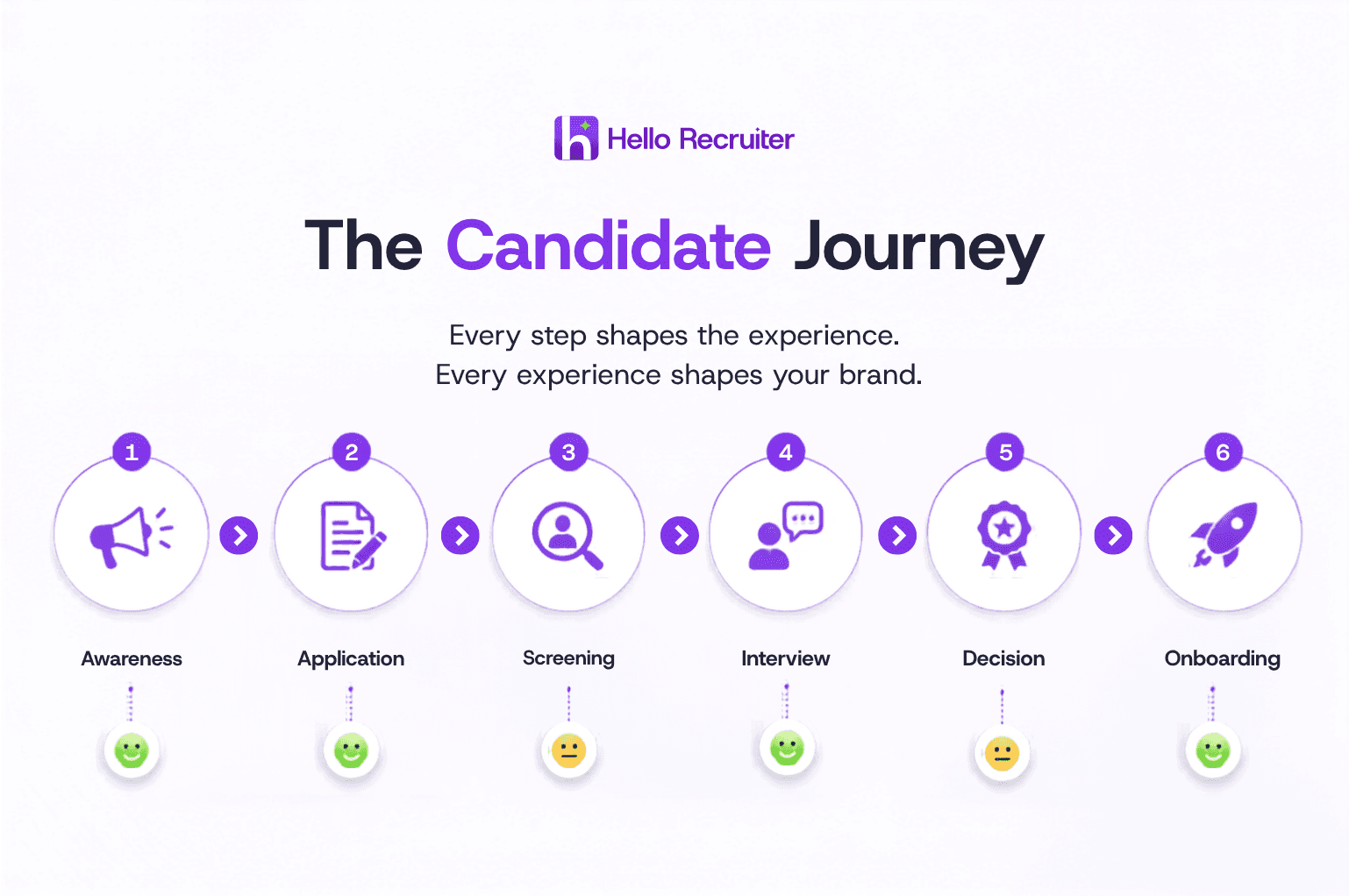
Candidate experience is what a job seeker walks away thinking, and telling other people, about your company once they've applied, waited, interviewed, and heard back from you (or didn't).
Why Candidate Experience Matters More Than Most Hiring Teams Realize
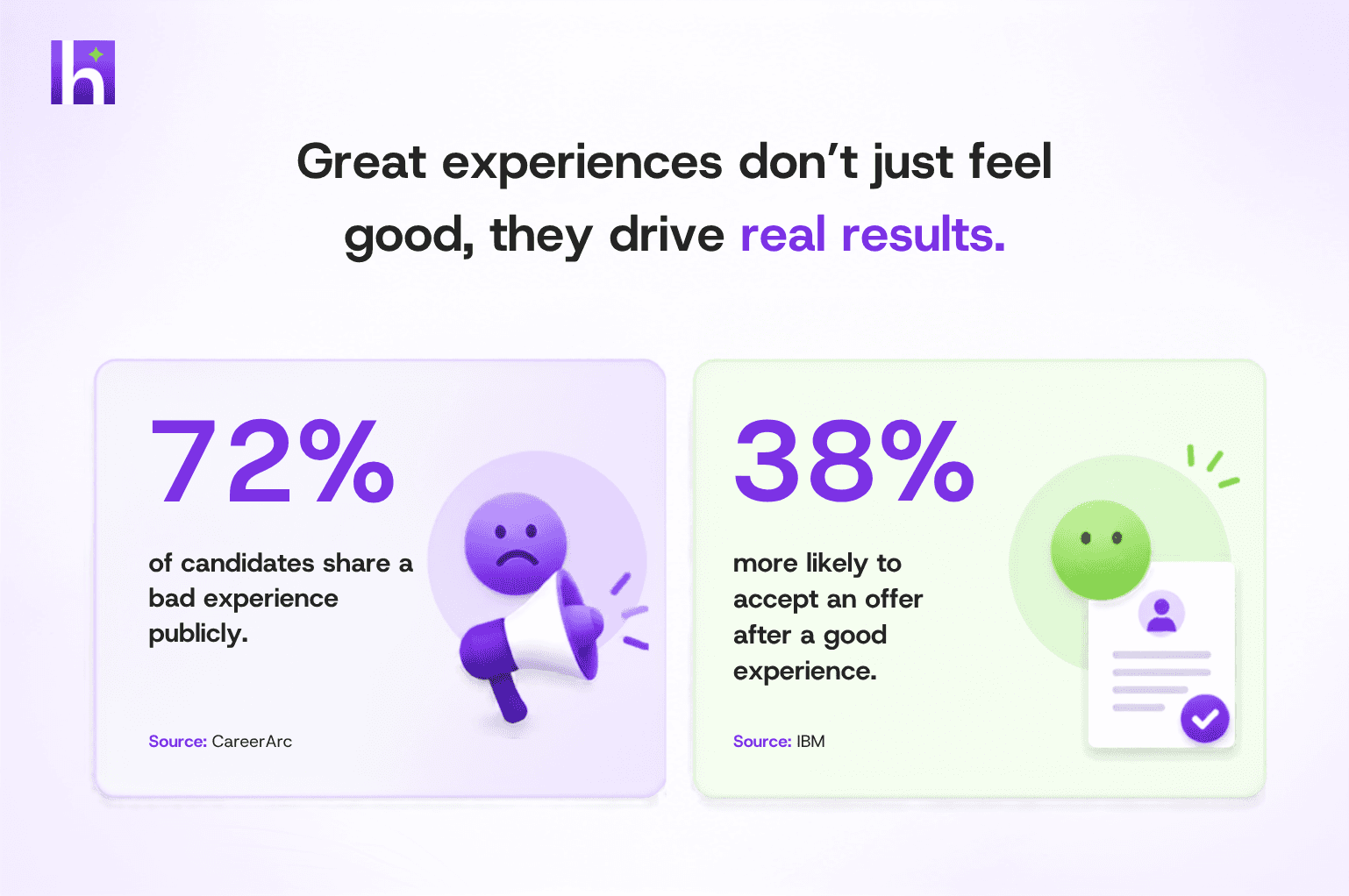
Candidates talk. When a hiring process goes badly, most people don't just quietly move on, they post about it. Glassdoor has tracked this: nearly three in four candidates with a bad experience go public about it- on review sites, on social media, in the group chats where job seekers in the same market compare notes. Every process you run doubles as an unpaid, uncontrolled ad for your employer brand.
It shows up in acceptance rates too. IBM's research found candidates who've had a good experience say yes to offers noticeably more often, about 38% more often than candidates who haven't. Referrals go up, drop-off goes down, and time to hire shortens, since your best candidates are almost always weighing two or three other offers and will pick whoever didn't waste their time.
This isn't about being nice for its own sake. It's about not losing good hires to a slow, confusing process, and not paying for that loss twice: once in the hire you lost, again in what that candidate tells everyone else.
Where Candidate Experience Actually Breaks
Most companies don't set out to give candidates a bad experience. It happens because nobody can personally manage hundreds of applicants at once, and the same five patterns show up almost everywhere:
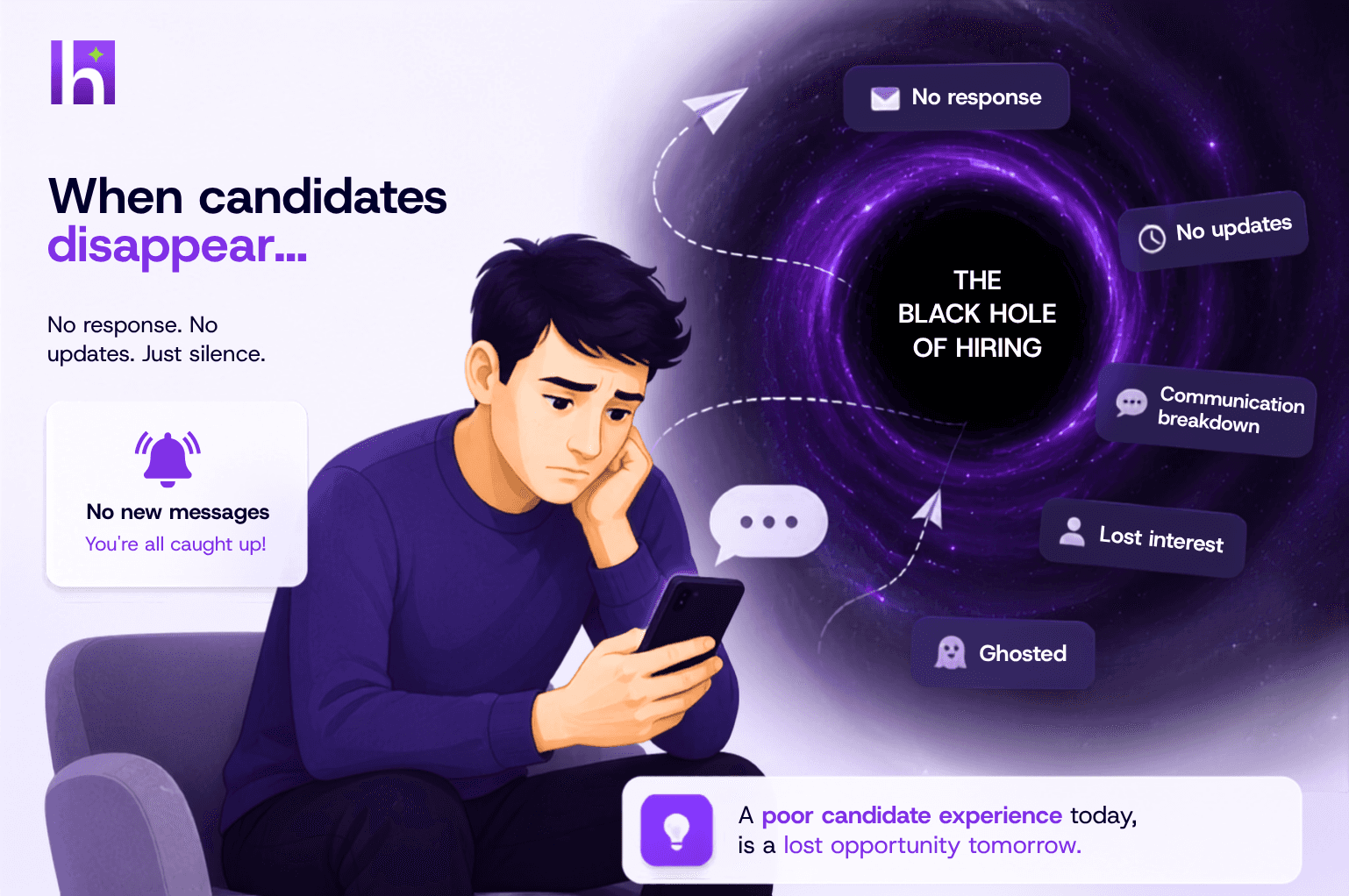
Silence after applying: A candidate applies and hears nothing for two or three weeks. By the time a recruiter follows up, they've already accepted another offer, and now they're telling other people what happened.
Generic, one-way automation: An auto-reply that says "we'll be in touch" tells a candidate nothing. People can tell the difference between a real update and a template.
Scheduling that turns into a part-time job: Back-and-forth emails to land on a time, broken links, calendar invites that vanish. Every extra step is a chance for a candidate to lose patience or take another offer.
Interviews with no structure: When every interviewer asks whatever comes to mind and scores on gut feeling, the process feels inconsistent to candidates, and it produces inconsistent decisions for you. (For what the fix looks like, see what a structured interview actually is.)
No answer, ever: Candidates rejected without ever hearing back are far more likely to talk about it publicly than candidates who get a respectful no.


How AI Improves Candidate Experience Without Replacing the Recruiter
AI doesn't fix a bad process by making it faster. It fixes it by doing the volume work a recruiter physically can't do across hundreds of applicants, so every candidate gets treatment that used to be reserved for a handful of finalists.
In practice, that looks like:
Instant acknowledgment. Applicants get a specific, real reply within minutes, not a template that says nothing.
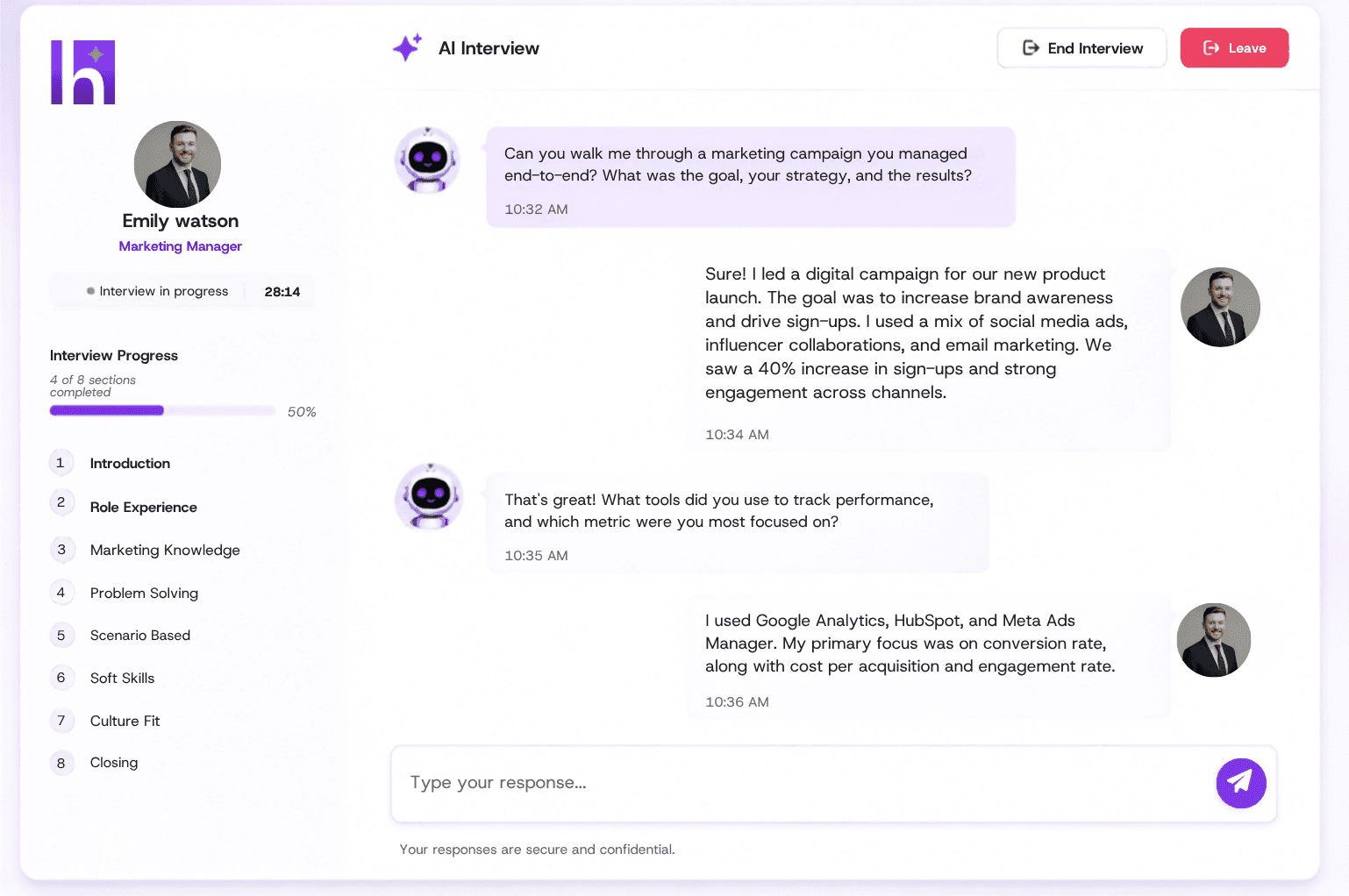
On-demand interviews. No back-and-forth to find a time. Candidates can start whenever works for them, including outside office hours.
Real answers to real questions. A candidate can ask about the role, the team, or benefits and get an accurate answer pulled from your actual knowledge base, instead of "someone will follow up."
An outcome for everyone. Pass or fail, every candidate hears back. A thoughtful no still protects your employer brand. Silence never does.
This is the layer Hello Recruiter's AI agents are built to handle: acknowledgment, scheduling, first-round interviews, and follow-up, through real two-way conversations instead of static forms. The scoring itself is built so it doesn't factor in protected attributes, evaluating what a candidate says and does rather than who they are. Recruiters still own the calls that matter: who moves forward, how an offer is framed, and the relationship-building AI was never meant to replace.
How to Measure Candidate Experience
You can't improve what you don't track. Four numbers cover most of what you need to know:
Satisfaction score. A short survey after key stages, a plain rating or an NPS-style question both work.
Completion rate. The share of invited candidates who actually finish their interview or assessment.
Offer acceptance rate. The clearest end-of-process signal for how candidates felt about the process, not just the offer itself.
Time to respond. How long candidates wait at each stage. This is usually where a good experience quietly turns into a bad one.
Track these by role and by stage, and you'll see exactly where candidates lose patience, well before your offer acceptance numbers tell you something's wrong.
Want to see this in practice? Here's how Hello Recruiter handles every touchpoint of the candidate experience, from the first acknowledgment to the final outcome.
Frequently Asked Questions
What is candidate experience in recruitment?
It's the sum of everything a candidate sees, hears, and waits for while going through your hiring process, and the opinion of your company they walk away with because of it. That opinion decides whether they accept your offer, apply again later, refer a friend, or warn people away from you.
Why does candidate experience matter?
Because candidates talk, and because it affects real hiring outcomes. A poor experience lowers offer acceptance and increases candidate drop-off, and it can quietly hurt your ability to attract applicants for future roles. A good one does the opposite.
What are the most common candidate experience mistakes?
Silence after applying, generic one-way automation, scheduling friction, unstructured interviews, and rejecting candidates without ever telling them. Most come from manual effort not scaling, not from a lack of care.
Does AI in recruiting replace recruiters?
No. AI takes on the repetitive volume work, instant replies, scheduling, first-round interviews, status updates, so recruiters can spend their time on the decisions and conversations that actually need a person.
How do you measure candidate experience?
Satisfaction or NPS surveys after key stages, how many invited candidates actually finish their interview, how often offers get accepted, and how long candidates wait between each step. Together, those four numbers show you almost exactly where your process is losing people.
Candidate Experience, Recruitment, AI Recruitment, Candidate Screening, Hiring Process, Talent Acquisition, Recruitment Technology

Marketing Manager, Hello Recruiter
Neha is the Marketing Manager at hellorecruiter.ai, an AI hiring platform built for businesses and staffing agencies. With a background in marketing and content strategy in recruitment niche, Neha focuses on helping hiring teams understand where AI genuinely fits into recruiting. Her work spans the full arc of hiring, from how roles get defined to how the right people get chosen, and everything that happens in between.